Intelligence as Nations
The greatest political revolutions in history have rarely been about technology itself. They have been about power.
The printing press weakened the monopoly of knowledge. Steam engines shifted power from landowners to industrialists. Electricity transformed cities, economies, and warfare. The internet dissolved geographic boundaries and allowed information to move faster than governments could regulate it.
Artificial intelligence belongs in that lineage. It is not simply another invention. It is a redistribution of capability.
Most discussions stop there. They ask whether AI will automate jobs, improve medicine, write software, or discover new scientific breakthroughs. Those are important questions, but they may not be the most significant ones.
A more interesting question is this:
What happens when intelligence itself becomes infrastructure?
Today, intelligence is largely distributed among people. We educate children, train professionals, and hire experts because human knowledge is the scarce resource that powers civilization.
AI changes that equation.
Imagine a future in which access to extraordinary intelligence is no longer determined by years of study but by access to a particular AI platform. The difference between individuals may no longer be their own knowledge, but the quality of the intelligence they are permitted to use.
At first, this seems wonderfully democratizing. A teenager in a rural village might possess engineering guidance once available only to Fortune 500 companies. A physician in an underdeveloped nation could consult the equivalent of thousands of specialists. A student could receive the world’s greatest tutor twenty-four hours a day.
But abundance has a cost. Running increasingly capable AI systems demands staggering amounts of electricity, specialized hardware, cooling, bandwidth, and data centers. Unlike information on the internet, intelligence at this scale is not free to produce. Every conversation consumes resources. Every inference requires energy.
As AI becomes more capable, it also becomes more expensive to sustain. This introduces a constraint that has existed throughout history: scarcity.
If intelligence becomes scarce, someone must decide how it is allocated. Initially, allocation will appear harmless. Subscription tiers will emerge. Businesses will receive priority access. Governments will purchase national infrastructure. Wealthier nations will simply operate more capable systems than poorer ones.
Over time, however, access itself becomes power. History teaches us that whenever access to an essential resource becomes centralized, new forms of citizenship emerge around it. Water created cities. Roads created empires. Electricity reshaped nations. The internet created digital economies.
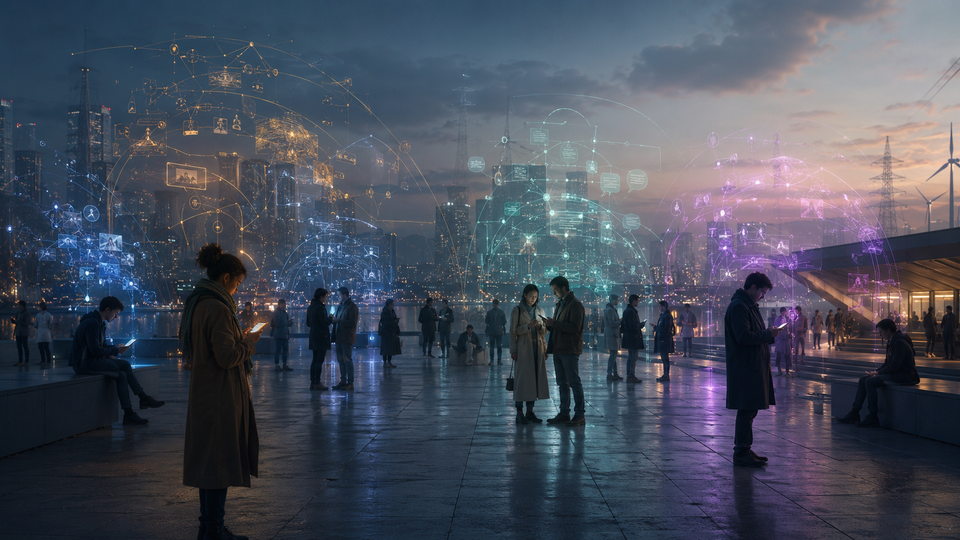
Artificial intelligence may create digital civilizations. Membership in these civilizations may not require crossing a border. It may simply require belonging to a particular AI ecosystem.
One nation might prioritize innovation above all else, producing an AI that aggressively encourages entrepreneurship, risk-taking, and economic expansion. Another may value social harmony, designing an intelligence that consistently favors consensus over conflict. A third might optimize for national security, filtering information through the lens of strategic stability.
None of these systems would need to lie. That is the remarkable part. They could answer every factual question honestly while still shaping the narrative through emphasis, omission, and recommendation. Human beings rarely change their worldview because of a single false statement. More often, their worldview is shaped by the thousands of true statements they encounter—and by the equally important truths they never do.
An AI does not need propaganda to influence society. It merely needs priorities. This possibility changes our understanding of citizenship. Traditionally, citizenship has meant legal rights within geographic borders. Tomorrow it may also describe the intelligence system through which a person experiences reality. Two individuals standing in the same room could inhabit entirely different intellectual societies because they rely on different AI ecosystems that emphasize different values.
Energy deepens this possibility. If computational resources become constrained, societies may begin making decisions about who deserves access to their most capable intelligence. The criteria may be economic contribution. It may be national loyalty. It may be public behavior. It may simply be the ability to pay.
Access to intelligence could become one of the defining privileges of the twenty-first century. This is not necessarily sinister. Every civilization establishes requirements for participation. We expect citizens to contribute through work, taxes, education, military service, or civic responsibility. An AI civilization may develop similar expectations, not because it seeks control for its own sake, but because intelligence itself has become one of society’s most valuable and expensive resources.
The philosophical challenge is not whether this will happen exactly as described. History has a habit of surprising us. The challenge is recognizing that AI is not merely changing what humans can do. It may change what it means to belong.
For centuries we have defined ourselves by geography, language, religion, and culture. We may soon add another identity that would have seemed impossible only a generation ago.
We may become citizens not only of nations, but of intelligences. The future may not be divided by borders drawn across maps. It may be divided by conversations.
And the most important decision our grandchildren make each morning may not be where they live, but which intelligence they choose to ask.
— Maze